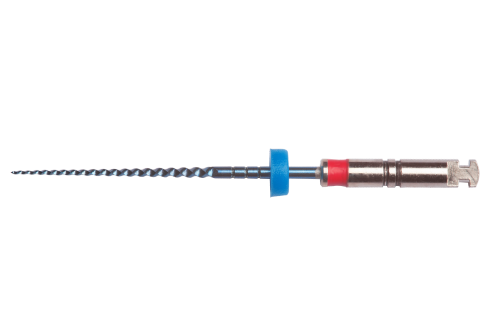
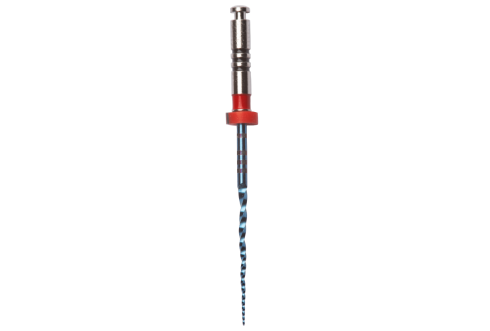
The Flexer file is crafted using Twin alloy and incorporates IonTech 6.0 NiTi, a superior form of NiTi
alloy renowned for its enhanced cyclic fatigue resistance compared to traditional NiTi. IonTech 6.0
NiTi encompasses all three crystalline phases: deformed and micro-twinned martensite, R-phase, and
austenite, resulting in superior mechanical and physical properties. This advanced alloy offers greater
flexibility and improved cyclic fatigue resistance compared to conventional NiTi alloys.
Additionally, the Monel alloy used in our Flexer file, sourced from Germany, surpasses NiTi in terms of
mechanical properties. Known for its exceptional strength and toughness at both micro and macro
levels, the Monel alloy demonstrates remarkable resistance to fatigue, fracture, corrosion, and
erosion.
The Flexer file also integrates heat activation and saw technology. Utilizing shape memory
characteristics, heat activation releases elasticity within a temperature range of 30-70 degrees Celsius.
At lower temperatures, the file exhibits random bending with decreased elasticity, while at oral
temperature, it maintains excellent elasticity. During canal negotiation, stress arises from friction and
temperature changes within the canal. This technology prevents instrument fracture by activating
super elasticity and flexibility at high temperatures or during temperature fluctuations, effectively
distributing stress from a single point throughout the working section.
A distinctive feature of our file system is the Saw technology. Given that 10% of file fractures occur
due to direct or indirect force applied during treatment, Saw technology is instrumental in preventing
such fractures. This innovative technology enables the file to adapt and conform to the canal shape,
thereby reducing the need for extra force during treatment.